
Spring is the best time to sort your heating
Your boiler’s just had its hardest six months, and this is the quietest time of year to deal with anything it needs.
Around this time of year, heating systems typically shut down — not because anything’s wrong, but because temperatures rise and the thermostat gets left alone for weeks. The boiler becomes forgotten until autumn.
But spring is actually the ideal window for heating maintenance. Most people wait until October, when engineers are overwhelmed with requests, which creates scheduling pressure and rushed work. Right now, with heating demand at its lowest, there’s room to do the job properly without a time crunch.
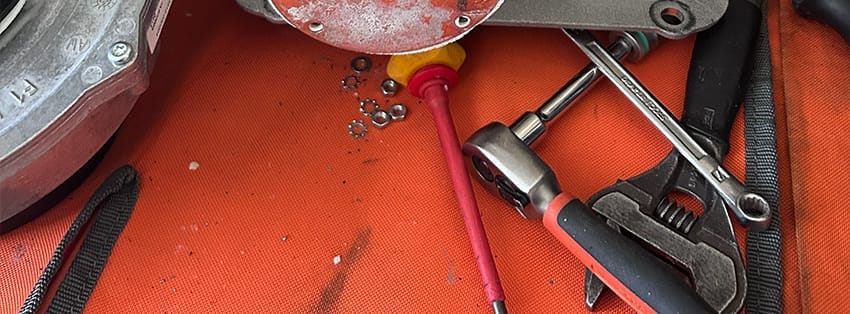
Your boiler has just had its hardest six months
Winter asks a lot of a boiler — running daily for extended periods through cold snaps and damp weather. Breakdowns might not happen straight away, but wear accumulates. Combustion efficiency drops off a little over a season, and seals and components go through repeated heating and cooling cycles.
Magnetite — black deposits — gradually settles inside the system, reducing radiator efficiency. This often shows up as slower heating or cold radiator bottoms. A lot of these problems only surface in October, when the system restarts after months of stress — situations that a spring service could have caught early.
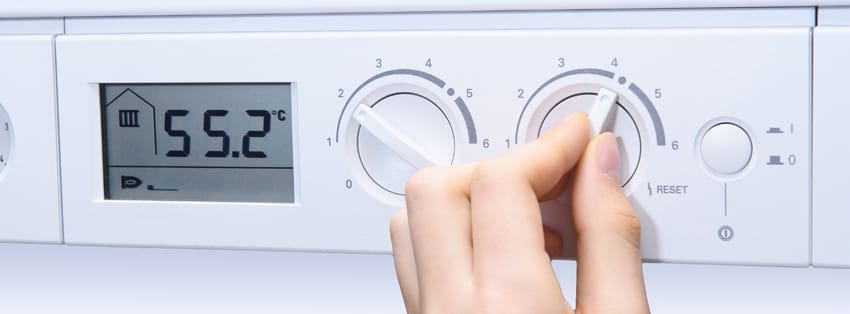
What we’re actually checking during a service
A proper service goes well beyond a checkbox exercise. We look at:
- Heat exchangers.
- Burner combustion readings.
- Flue venting safety.
- Seals and gas pressure.
- Safety controls.
- System-wide water pressure behaviour.
- Inhibitor levels.
- Early signs of corrosion or leaks.
Catching a developing issue early — a weeping seal, a gradual pressure drop — costs substantially less than an emergency repair in the middle of winter. Spring scheduling also gives us more diary flexibility, and more thorough work without back-to-back emergency callouts getting in the way.
The sludge problem, and why it’s worse in Colchester than most places
Essex has exceptionally hard water — among the hardest in the UK. That accelerates limescale build-up inside heat exchangers, forcing boilers to work harder for the same output while energy bills creep up unnoticed.
Magnetite formation adds to the problem — this black sludge wears pump components down gradually and settles at the bottom of radiators, causing uneven heating. If your system hasn’t had a power flush recently, it’s likely to benefit. A power flush forces clean water through the whole system at high pressure, clears out the built-up deposits, and restores proper flow.
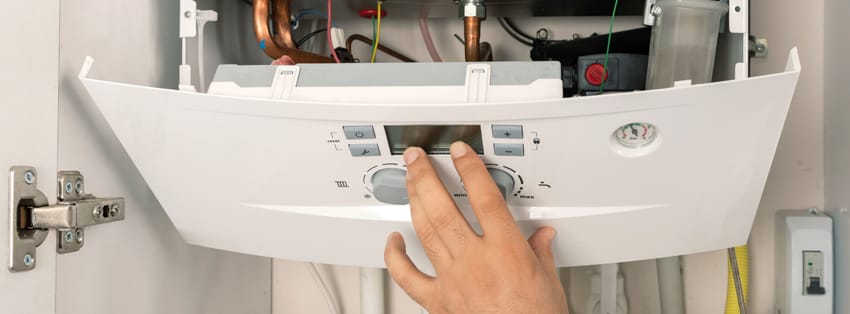
If your boiler’s getting on a bit, now’s a good time for that conversation
A boiler over ten years old isn’t automatically obsolete — some twelve-year-old units still run efficiently. But an older boiler that’s needed several repairs is worth a proper look at replacement.
Spring gives you the room to have that conversation properly. Without a heating emergency or winter pressure hanging over the decision, you can think through boiler types, control upgrades, and the numbers calmly. A modern unit typically runs significantly more efficiently than a decade-old model, and the annual gas savings can offset a good chunk of the installation cost over time.
A word on boiler care plans, and why they make a lot of sense
An annual service presented as one unexpected lump sum is easy to keep putting off. A monthly care plan spreads that cost through the year while including your annual service — no surprise bills, and no second-guessing whether a minor concern is worth calling about, since it’s already covered. For most households, it removes the scheduling hassle and gives you payment predictability instead.
So what should you actually do?
Book a service if it’s been twelve months since the last one. Get a radiator or pressure gauge irregularity looked at properly rather than repeatedly resetting the system. And if your boiler is getting on, spring is a good time to start that replacement conversation, free of winter urgency.
We cover Colchester, Ardleigh, Wivenhoe, Marks Tey, Clacton, Ipswich, and across Essex and Suffolk.
Prefer to talk to a real person?
You'll speak to the engineer who'd actually do the job — not a call centre script. Ask us anything, or get a free quote.
Keep reading
More from the blog
 Home Heating Advice
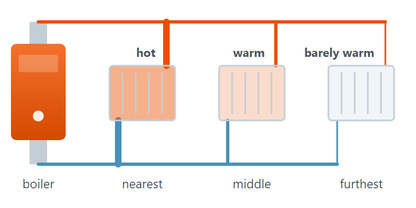
Why Some Rooms Never Get Warm (and It’s Usually Not the Boiler)
The lounge is roasting and the back bedroom never gets there. The boiler gets blamed, but it's usually where the hot water goes once it leaves.
Read more Home Heating Advice
Your Boiler’s Flow Temperature — and Why the Usual Advice Might Not Apply to You
There’s a piece of advice that’s done the rounds for a few years now. Turn your boiler down to 60 and save around 8% on your gas. It’s genuinely good advice — it costs nothing and takes about a minute, and most boilers are set higher than they need to be straight out of the … Continued
Read more Home Heating Advice
How Engineers Read the Signs Your Heating System Shows in Winter
Noise, slow warm-up, pressure changes — what your heating system is telling you when winter puts it under real pressure.
Read more