
Commercial Gas Safety Certificates
Gas safety inspection and certification for commercial boilers, warm air units and radiant tube heaters across Essex and Suffolk.
Why it matters
It is a duty, not a formality.
If you are responsible for a commercial building, you are responsible for the gas appliances in it being safe and for being able to show that they are. That obligation does not move because the building is leased, managed by an agent, or only occupied part of the year.
The paperwork also matters in its own right. Insurers ask for it, landlords ask for it, and after an incident it is the first thing anybody asks to see. A certificate that exists but cannot be found quickly is very nearly as bad as one that was never issued.
What gets checked
Every appliance, properly documented.
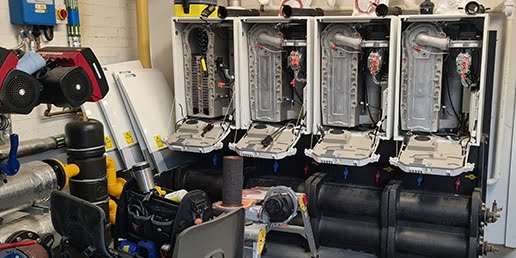
- Commercial gas boilers and plant room installations
- Gas warm air units and radiant tube heaters
- Gas interlocks and ventilation where fitted
- Pipework condition, soundness and support
- Flue integrity and combustion analysis
- Emergency control valve and isolation
- Certification issued and copies retained
How it works
Booked, inspected, certified.
We agree a date that suits the building, attend, inspect and test every appliance in scope, and issue the certification. Anything that fails is explained to you at the time — what it is, whether it is immediately dangerous, and what putting it right involves.
For multi-site portfolios we put the whole estate on one renewal schedule, so certificates come due together rather than trickling in across the year and getting missed.
Why GH Heating
Certificates you do not have to chase.
- Gas Safe registered 651846 for commercial gas work
- SafeContractor approved and independently vetted
- Documentation issued promptly, not weeks later
- Renewal reminders before the certificate expires
- Multi-site schedules kept in step
Common questions
What people ask about commercial Gas Safety Certificates.
How often do commercial gas appliances need certifying?
Annually as a baseline, and your insurer or a lease may require more. If appliances are in a catering environment or connected to an interlock, the inspection regime is stricter — tell us what is on site and we will confirm what applies.
Who is responsible, us or our landlord?
It depends what your lease says, and leases differ. Usually the party who controls and maintains the appliance carries the duty. If it is genuinely unclear, get it clarified in writing rather than assume — both parties assuming the other has it is the common failure.
What happens if an appliance fails the inspection?
We explain what has failed and how serious it is. Anything immediately dangerous is made safe and disconnected there and then, which we would do regardless of who installed it. Everything else gets quoted so you can decide.
Can you certify appliances you did not install or service?
Yes, that is most of this work. We inspect what is there on its merits.
Can you handle several sites at once?
Yes. Multi-site is where this gets genuinely painful to manage in-house, and putting everything on one schedule with one point of contact is most of the value we add.
Related services
Done on the same visit.
We can certify and service in the same visit, which usually saves a second attendance.
Tell us about your site.
We will come out, look at the plant and quote in writing — no obligation and no sales visit.
Guides
Guides from our engineers
 Commercial & Landlord Heating
 Commercial Gas Safety Checks – Importance & Process Explained
Commercial gas safety checks are a legal requirement and a responsible practice — here's how they're carried out, and what the certificates mean.
Read more Commercial & Landlord Heating
 Maintenance Guide for Commercial Kitchens
What proper plumbing and gas maintenance looks like in a commercial kitchen — daily through to annual checks.
Read more